
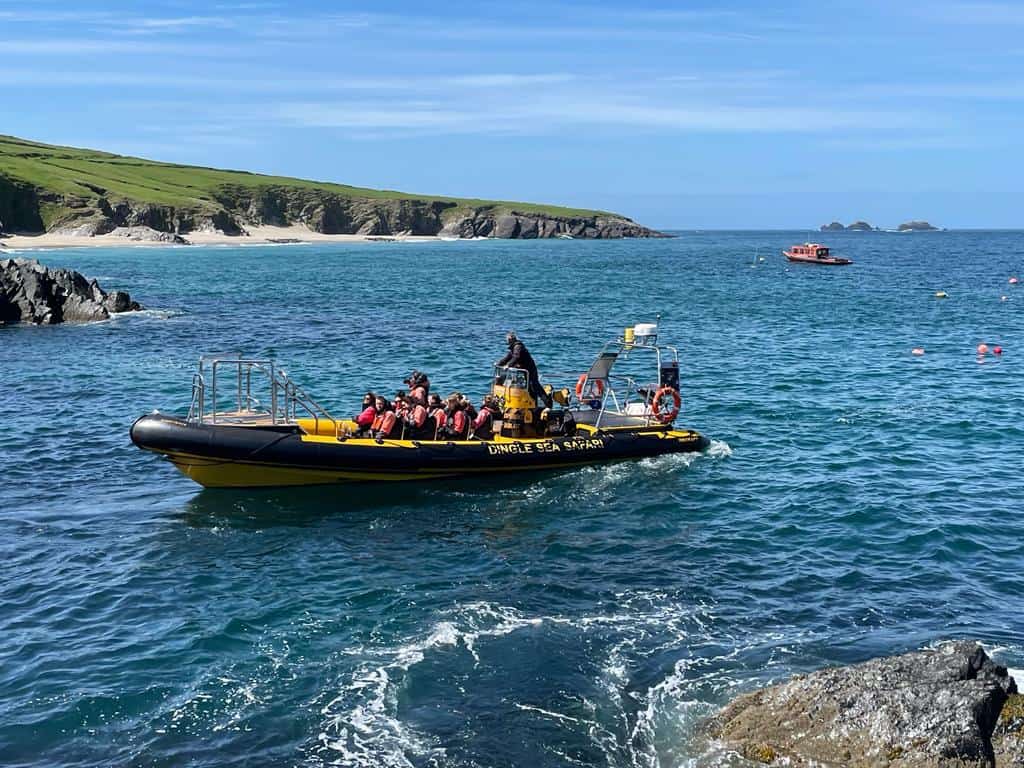
Most people picture Dingle Bay in July, with long evenings and a full pier. We love July, but ask anyone on our crew and they will tell you that autumn is when this coastline gets really interesting. The crowds thin out, the light turns golden and low, and the water is busy with animals that have spent the summer fattening up.
What you can still see on Dingle Bay in autumn
Minke whales. Autumn is the season when minke whales move through these waters, following the shoals of fish that gather close to the coast. They are among the smaller whales you can meet in Irish waters, and they are shy, so a sighting is usually a quiet, breathtaking moment: a dark back, a small fin, a soft breath hanging in the cold air. We spot whales most often between June and October, which is why so many of our guests choose to come out late in the year. If you want to see how sightings are recorded around the Irish coast, the Irish Whale and Dolphin Group is a brilliant resource.
Dolphins and seals. Dolphins are seen around the peninsula all year round, and bottlenose dolphins still frequent the bay in autumn. The seals are never far from the rocks and islands, and the Blaskets hold one of the biggest seal colonies in Ireland. In autumn the grey seal pups arrive on the island beaches, which gives the colony a very different feel. Our wildlife page tells you more about who lives here.
Seabirds. Gannets and other seabirds keep working the bay, folding their wings and diving for fish. Watching one hit the water from height is a show in itself, and in cool autumn air the splash and spray carry across the water.
Why the autumn light is worth the trip
Photographers in our boat often go quiet in October. The sun sits lower, the colour is warmer and the cliffs pick up a golden edge that the high light of midsummer simply does not give. Cooler, clearer air means the Blasket Islands look sharper on the horizon, and the sea can be glassy on a calm day.
Dress for it. Warm clothing is the minimum, and a hat and gloves are recommended. We provide waterproof jacket and trousers, so you only need to bring warm layers underneath.
A coastline without the crowds
The cliffs, caves and the Blasket Islands are every bit as dramatic in autumn, and often quieter. Our tours carry a maximum of 12 people, so the experience stays personal in every season. If you have not read them yet, our guide to the wildlife of Dingle Bay and the best time to visit and the story of why the Dingle Peninsula looks completely different from the water will give you a good idea of what to expect.
Make a day of it on land
Autumn is a lovely time to take Dingle slowly. Warm up after the boat with a tour at the Dingle Distillery, have a cone of sea salt ice cream at Murphy’s if you are feeling brave, or take the children to Dingle Oceanworld on the marina. Late November brings the bilingual Dingle Literary Festival, and our festivals in Dingle page have the rest of the calendar. For more ideas, browse our attractions and experiences guide.
A word on honesty
This is wild wildlife, so we can never promise a sighting. Every day on the water is different, and that is exactly what keeps it exciting for us, even after all these years. What we can promise is the coastline itself, a skipper who knows it well, and a good story or two along the way.
Looking back on a great season
This post is also a thank you. 2026 has been a busy and happy season on the bay, and we will share the full story in a couple of weeks. For now, thank you to everyone who has come aboard.
Plan your trip
Book your Dingle boat tour here and follow us on Instagram @dingleseasafari to see what we spot.